
ASA 275 Explained: The Right Filament for Outdoor Use? UV, Weather & Temperature Tests
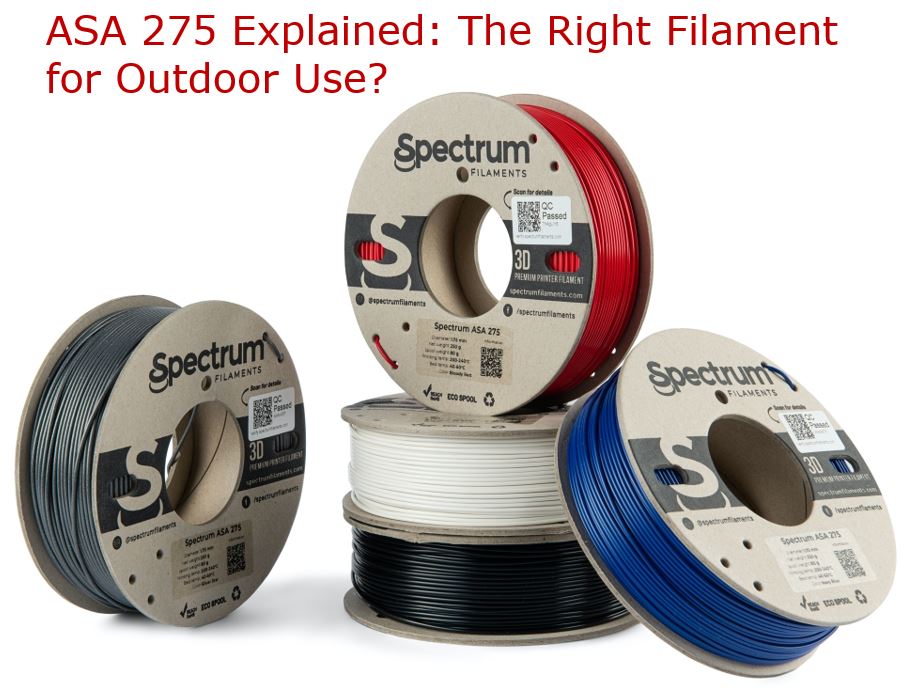
When it comes to 3D printing for outdoor applications, material choice matters more than printer choice. Sunlight, rain, humidity, heat cycles, and cold nights will quickly destroy parts made from standard filaments. This is where ASA 275 stands out as one of the most reliable outdoor-ready filaments available today.
In this article, we’ll take a deep dive into:
- What ASA 275 is and how it differs from standard ASA
- Why UV resistance matters more than strength for outdoor prints
- How ASA 275 performs under real UV, weather, and temperature stress
- Long-term outdoor use cases
- Printing best practices
- Comparisons with PLA, PETG, ABS, and Nylon
- When ASA 275 is the right choice and when it isn’t
1. What Is ASA 275?
ASA (Acrylonitrile Styrene Acrylate) is an engineering thermoplastic developed as an improvement over ABS. While ABS offers good strength and heat resistance, it performs poorly under sunlight due to UV degradation. ASA replaces the butadiene component of ABS with an acrylic ester, dramatically improving UV stability.
ASA 275 refers to a specific formulation or grade optimized for:
- Outdoor durability
- Thermal stability
- Improved flow and layer bonding
- More consistent printing behavior
Compared to generic ASA, ASA 275 is often engineered to reduce warping, improve surface finish, and deliver predictable mechanical performance even after prolonged environmental exposure.
Key Material Properties (Typical Range)
- Glass transition temperature (Tg): ~100 °C
- Heat deflection temperature (HDT): ~85–90 °C
- Density: ~1.07 g/cm³
- UV stability: Excellent
- Weather resistance: Excellent
- Chemical resistance: Good (oils, greases, mild chemicals)
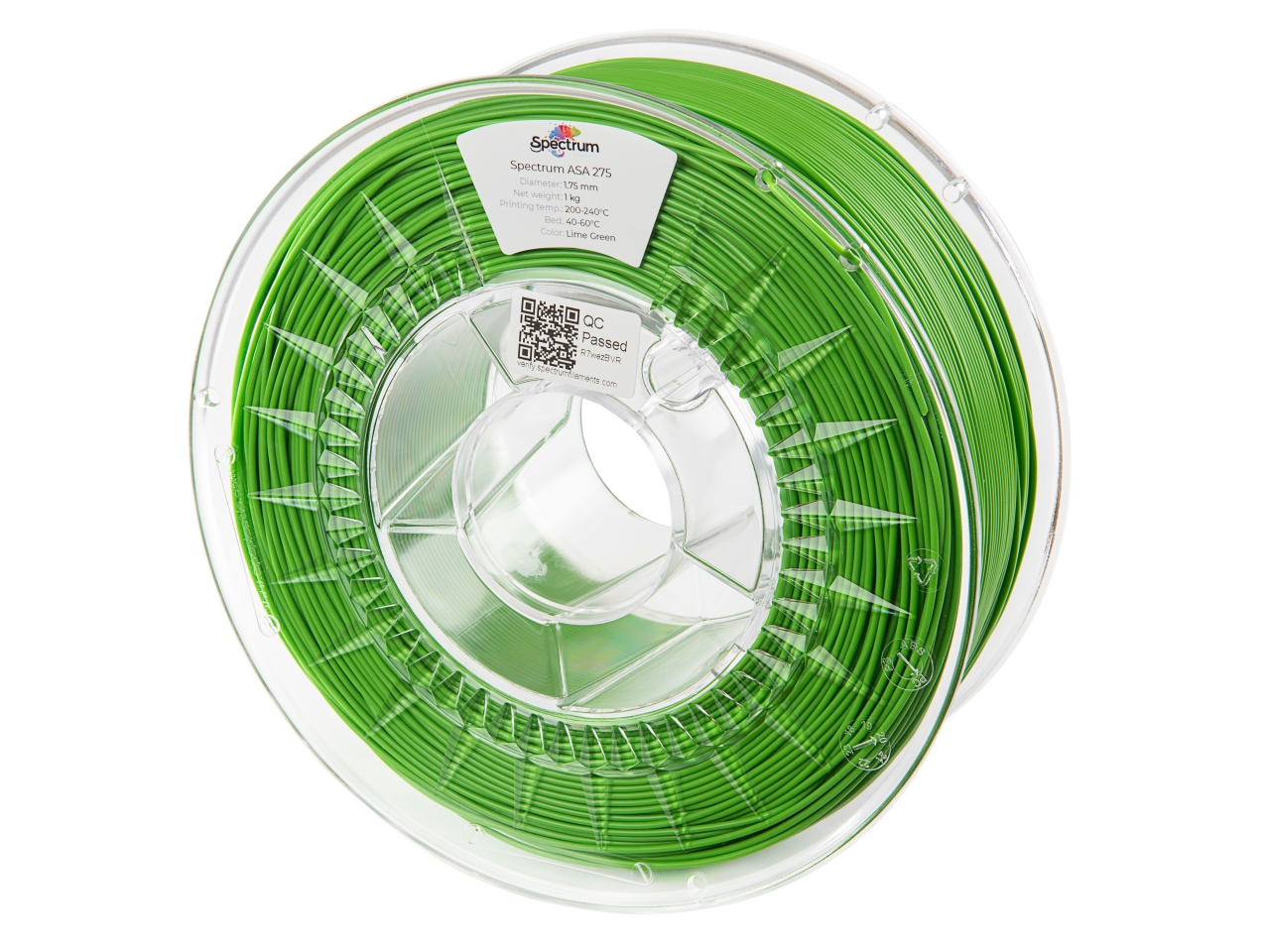
2. Why Outdoor Printing Destroys Most Filaments
Before explaining why ASA 275 excels, it’s important to understand why outdoor environments are so damaging to plastics.
The 4 Main Outdoor Enemies
- UV Radiation – breaks polymer chains, causing brittleness and color fading
- Thermal Cycling – daily heating and cooling causes expansion and contraction
- Moisture & Humidity – leads to swelling, micro-cracks, and material fatigue
- Long-term Heat Exposure – softens low-temperature plastics permanently
Many filaments look strong indoors but fail outdoors within weeks or months.
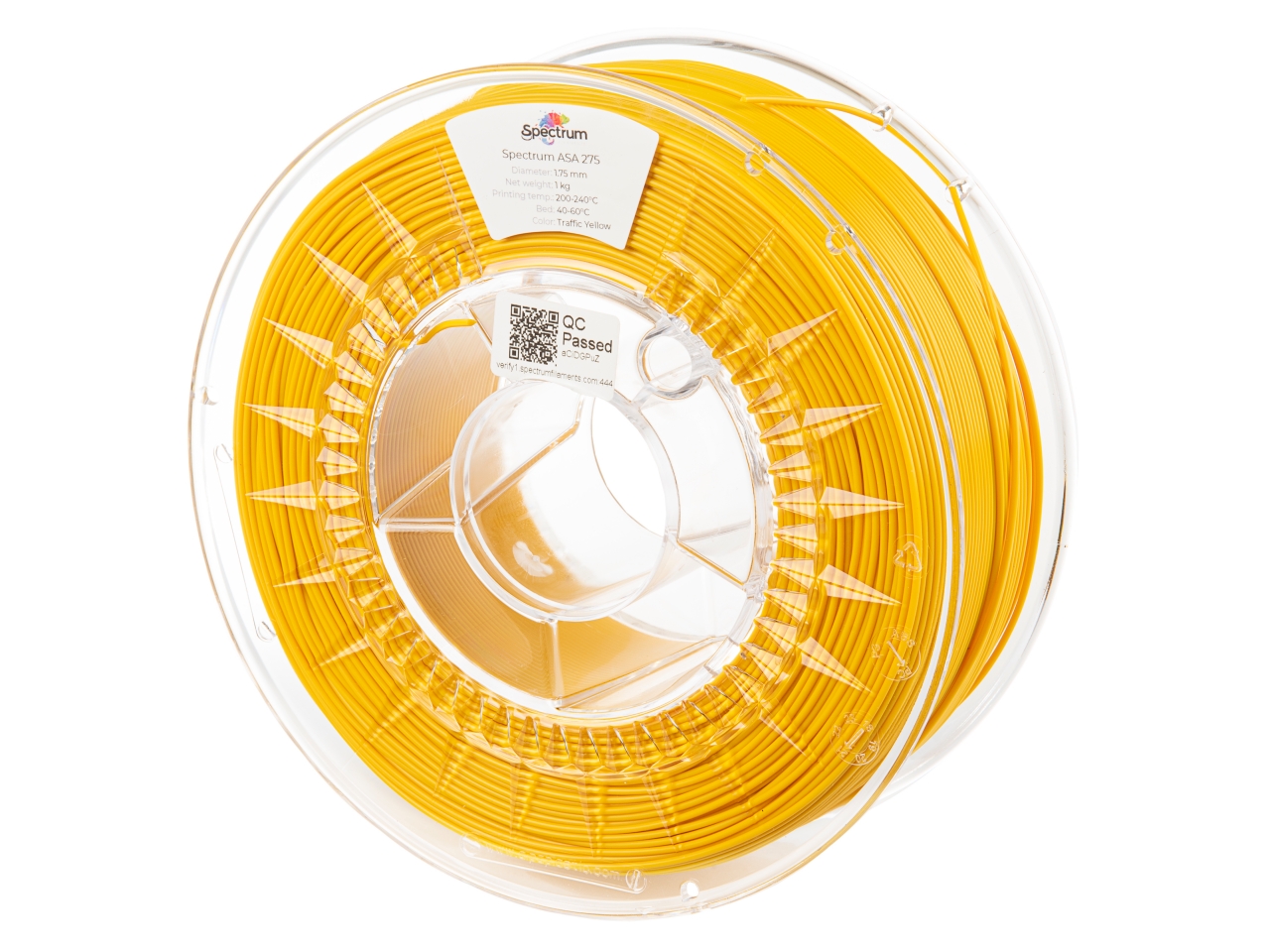
3. UV Resistance: ASA 275’s Biggest Advantage
Why UV Resistance Matters
UV radiation doesn’t just fade color, it chemically degrades plastic at a molecular level. Over time, this leads to:
- Cracking
- Chalky surfaces
- Loss of tensile strength
- Sudden part failure
ASA 275 vs Common Filaments (UV Exposure)
PLA:
- Rapid discoloration
- Becomes brittle
- Structural failure in months (sometimes weeks)
ABS:
- Good initial strength
- Severe UV degradation
- Yellowing and cracking over time
PETG:
- Better than PLA
- Still degrades under prolonged sunlight
- Can become rubbery and weak
ASA 275:
- Designed specifically to resist UV radiation
- Retains color and strength for years
- Maintains surface integrity even under constant sun
This is why ASA is commonly used in automotive exterior parts, outdoor enclosures, and signage in industrial manufacturing.
4. Weather Resistance: Rain, Humidity & Outdoor Abuse
ASA 275 doesn’t just survive sunlight, it thrives in unpredictable weather.
Moisture Resistance
Unlike Nylon, ASA:
- Does not absorb water easily
- Maintains dimensional accuracy in humid environments
- Does not swell or soften after rain exposure
Wind & Mechanical Stress
Outdoor parts experience constant micro-vibrations from wind. ASA 275’s impact resistance and toughness prevent fatigue cracks that commonly appear in brittle plastics.
Chemical Exposure
ASA resists:
- Automotive fluids
- Oils and greases
- Cleaning agents
- Environmental pollutants
This makes it ideal for outdoor housings, sensor mounts, and mechanical fixtures.
5. Temperature Performance & Stress Testing
High-Temperature Performance
ASA 275 performs reliably in hot environments:
Withstands direct sunlight on dark surfaces
Does not soften in hot vehicles or enclosed outdoor spaces
Maintains shape where PLA would deform
Cold Weather Performance
Unlike PLA (which becomes brittle in cold conditions), ASA:
- Retains impact resistance at low temperatures
- Handles freeze-thaw cycles well
- Does not crack easily during winter use
Thermal Cycling Resistance
Repeated heating and cooling causes internal stress in plastic parts. ASA 275’s balanced thermal expansion makes it highly resistant to warping, splitting, and delamination over time.
6. Long-Term Outdoor Use: Real-World Applications
ASA 275 is commonly used for:
Outdoor Fixtures
- Garden tool holders
- Hose guides
- Fence brackets
- Solar light mounts
Automotive & Mobility
- Exterior trim components
- Sensor housings
- Mirror mounts
- Motorcycle accessories
Electronics & Enclosures
- Weatherproof boxes
- Camera housings
- IoT device enclosures
Industrial & Utility Parts
- Cable management clips
- Outdoor signage mounts
- Ventilation components
In many cases, ASA parts last multiple years outdoors with minimal degradation.
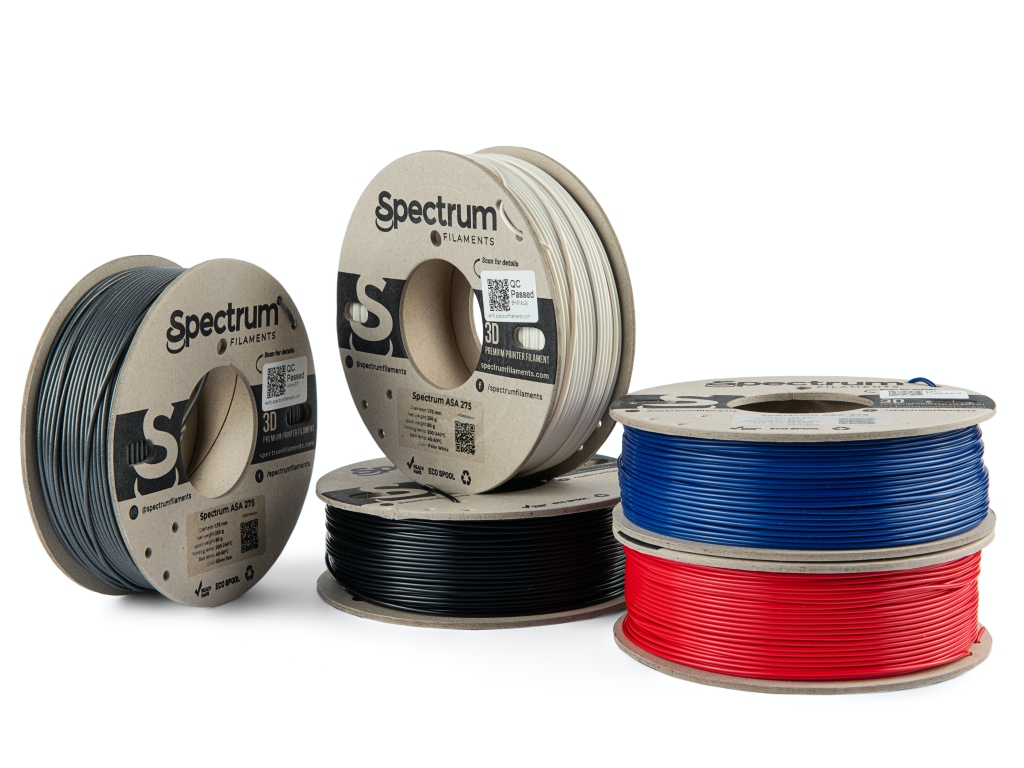
7. How to Print ASA 275 Successfully
ASA 275 is easier to print than ABS—but it still requires proper setup.
Recommended Print Settings
- Nozzle temperature: 235–260 °C
- Bed temperature: 90–110 °C
- Enclosure: Highly recommended
- Cooling fan: Low or off
- Adhesion: PEI sheet, glue stick, or ABS slurry
Best Practices
- Use an enclosure to prevent warping
- Avoid drafts
- Allow slow, even cooling
- Dry filament before printing for best surface finish
Surface Finish & Post-Processing
ASA 275:
- Sands well
- Can be vapor smoothed (acetone)
- Accepts paint and coatings easily
8. ASA 275 vs Other Outdoor Filaments
ASA 275 vs PLA
- PLA is easier to print
- ASA lasts 10× longer outdoors
- PLA is unsuitable for permanent outdoor use
ASA 275 vs PETG
- PETG is more flexible
- ASA has superior UV resistance
- ASA performs better in heat and long-term exposure
ASA 275 vs ABS
- Similar strength
- ASA has dramatically better UV stability
- ASA is safer for outdoor parts
ASA 275 vs Nylon
- Nylon is stronger but absorbs moisture
- ASA is more dimensionally stable outdoors
- ASA requires less maintenance
9. When NOT to Use ASA 275
ASA 275 may not be ideal if:
- You need extreme flexibility
- Your printer cannot handle high temperatures
- You need ultra-low warp printing without an enclosure
- The part is purely decorative and kept indoors
For those cases, PETG or PLA may be more practical.
10. Final Verdict: Is ASA 275 the Best Outdoor Filament?
For long-term outdoor durability, ASA 275 is one of the best all-around filaments available today.
Why ASA 275 Wins
Excellent UV resistance
Superior weather durability
High heat tolerance
✔ Strong and impact-resistant
✔ Industrial-grade reliability
If your project will live outdoors; ASA 275 should be your first choice!